Glycan Display Platform
CD BioGlyco is at the forefront of glycobiology, offering a cutting-edge glycan display platform and comprehensive services that empower our clients to explore, analyze, and manipulate glycans with precision and flexibility for applications such as drug development.
Comprehensive and Custom Glycan Display Service at CD BioGlyco
Our glycan display platform stands out for its versatility, offering traditional glycan display, cell-based glycan display, neoglycolipid (NGL) display, liquid glycan display (LiGA), glyco-phage display, and de novo glycan display methodologies. Our service advantages lie in providing tailored solutions for glycobiology research, spanning drug discovery, biosensor development, and glycan-protein interaction studies. With a commitment to excellence, we collaborate closely with clients, offering a platform for advancing their specific research goals.
Traditional Glycan Display Array
At CD BioGlyco, our traditional glycan display array services encompass Natural oligosaccharide library construction, Chemical and Enzymatic synthesis-based oligosaccharide library construction, Modular synthesis-based oligosaccharide library construction, oligosaccharide library Immobilization, Glycan Microarray Assay, and more. These services provide researchers with a comprehensive toolkit to explore diverse glycan structures and interactions, ultimately advancing glycobiology research.
Fig.1 The standard process of the traditional glycan display array. (CD BioGlyco)
Our glycan microarray assay includes but is not limited
- Synthetic Glycan Microarray Assay
- Microbial Glycan Microarray (MGM) Assay
- Human Milk Oligosaccharide (HMO) Microarray Assay
- Sialylated Oligosaccharides Microarray Assay
- Glycosaminoglycan (GAG) Microarray Assay
- ABH Blood Type I-VI Antigen Microarray Assay
Cell-based Glycan Display Array
CD BioGlyco provides the cell-based glycan display array, leveraging cutting-edge service technologies to delve into the intricate interplay of glycans within cellular environments. Our advanced offerings encompass precise Glyco-engineered Cell Construction, and the development of cell-based O-Glycan, N-Glycan, GAG, and Glycoprotein arrays.
Through a streamlined service process, we apply sophisticated techniques in customized cell engineering design, ensuring accurate glycan presentation. Meticulous construction is followed by rigorous quality control, validating glycan structures and array functionality. This technologically driven approach empowers researchers to unravel the complexities of glycans at the cellular level, propelling glycobiology research to new frontiers. Below are our custom cell construction services.
- GPI Anchor Pathway-based Glyco-engineered Cell Construction Service
- Glycolipids (GSL) Pathway-based Glyco-engineered Cell Construction Service
- N-linked Glycan Pathway-based Glyco-engineered Cell Construction Service
- O-GalNAc Pathway-based Glyco-engineered Cell Construction Service
- O-Fuc Pathway-based Glyco-engineered Cell Construction Service
- O-Man Pathway-based Glyco-engineered Cell Construction Service
- C-Man Pathway-based Glyco-engineered Cell Construction Service
- O-Glc Pathway-based Glyco-engineered Cell Construction Service
- O-Xyl Pathway-based Glyco-engineered Cell Construction Service
- O-Gal Pathway-based Glyco-engineered Cell Construction Service
- O-GlcNAc Pathway-based Glyco-engineered Cell Construction Service
- Glycan Elongaton/branching Pathway-based Glyco-engineered Cell Construction Service
- Glycan Capping Pathway-based Glyco-engineered Cell Construction Service
Neoglycolipid (NGL) Display Array
CD BioGlyco presents the NGL display array, a specialized service catering to the exploration of glycans in unique lipid contexts. This offering enables researchers to study glycan-lipid interactions and their implications across diverse applications. Our service encompasses the creation of tailored NGL display arrays, providing a platform for in-depth investigations into glycan-lipid interplay. Through advanced methodologies, we ensure precise and reliable presentation of neoglycolipids, empowering researchers to unlock new insights in glycobiology. With CD BioGlyco's expertise, the NGL display array becomes a valuable tool for unraveling the intricate roles of glycans in lipid-based environments.
Fig.2 Schematic representation of the NGL-based microarray system. (Palma, et al., 2014)
Liquid Glycan Display Array (LiGA)
CD BioGlyco introduces the LiGA, a cutting-edge service designed to unravel the complexities of glycans in liquid environments. This innovative offering provides researchers with a versatile platform for studying glycan interactions and functions in a fluidic context. Our LiGA service involves the construction of dynamic glycan arrays, allowing for high-throughput screening and in-depth analysis. With precision and adaptability, CD BioGlyco empowers researchers to explore liquid-phase glycan dynamics, advancing the understanding of glycobiology.
Here are the LiGA services you can find at CD BioGlyco
- LiGA Construction Service
- LiGA-based Glycan Modification Service
- Quality Control of LiGA
- Functional Validation of LiGA
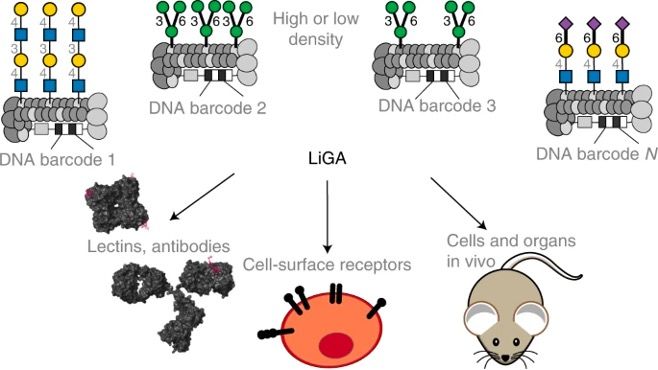
Fig.3 LiGAs identify the glycoconjugates with optimal avidity necessary for binding to lectins. (Sojitra, et al., 2021)
CD BioGlyco spearheads glycophage display technology with a range of specialized services. Our offerings include N-linked and O-linked glycoprotein glycophage display system construction, glycophage display-based Glycosylase Genetic Analysis, Glycoarray, Antibody Development, Epitope Mapping, and Biomarker Development. Through advanced service technologies, we meticulously construct tailored glycophage display systems, enabling high-precision glycan analysis, array development, antibody generation, epitope mapping, and biomarker discovery.
- N-linked Glycoprotein-based Glycophage Display System
- O-linked Glycoprotein-based Glycophage Display System
De novo glycan display facilitates the elucidation of glycan structures, including the sequence and linkage information of monosaccharides within complex glycans. This is crucial for understanding the biological functions of glycans in various physiological and pathological processes.
Here are the de novo glycan display services you can find at CD BioGlyco.
- Cell-surface Glycan Editing
- Examining the Effects of Altering Blood Group Antigens on Erythrocyte Cell Surfaces
- Preventing Cellular Rejection During Transplantation
- Modulating Chemical Composition and Physical Parameters of Glycocalyx
- Tailoring Cell Membranes with Biologically Active Glycans
- Targeting Glycosaminoglycan-mediated Growth Factor Signaling to Influence Stem Cell Specification
- Long-term De Novo Glycan Display for Directing Stem Cell Fate
Publication
Technology: Sanger sequencing and deep sequencing, MALDI analysis, Protein-binding experiments, Cell-based assays, Animal experiments, Statistical analysis
Journal: Nature Chemical Biology
IF: 14.8
Published: 2021
Results: In constructing LiGA building blocks, researchers selected the scalable M13 platform for its stability and compatibility with various cloning methods and conjugation strategies. Despite the non-glycosylated nature of the M13 virion, we chemically conjugated desired glycans to a subset of the major coat protein pVIII, creating a multivalent display of ~200–1,500 glycans on the virion. Leveraging a silent barcode near the pIII cloning site enabled the assembly of a glycan library with distinct DNA-encoded barcodes. Using synthetic glycans with an alkyl-azido linker, SPAAC ligation allowed efficient conjugation, providing semi-quantitative estimates of glycan densities. This robust construction methodology facilitates diverse applications in glycobiology research.
Fig.4 Synthesis and characterization of LiGA components. (Sojitra, et al., 2021)
Applications
- Facilitating high-throughput screening to identify glycans with specific interactions, aiding in the discovery of potential therapeutic candidates.
- Contributing to the creation of innovative biosensors for real-time monitoring of glycan interactions, enabling sensitive and specific detection methods.
- Providing a platform for in-depth studies on glycan-protein interactions, unraveling the complexities of biological processes and potential therapeutic targets.
- Allowing the assembly of glycan libraries with distinct DNA-encoded barcodes, providing researchers with a comprehensive toolkit for studying a variety of glycan structures.
Highlights
- Advanced glycan display platform
Access to a cutting-edge glycan display platform that supports diverse methodologies, such as traditional glycan display, cell-based glycan display, NGL display, LiGA, glycophage display, and de novo glycan display.
- Customized solutions
Tailored services that allow researchers to customize experiments based on specific project requirements, providing flexibility in addressing unique research objectives.
- Comprehensive glycan library creation
Expertise in creating glycan libraries with distinct DNA-encoded barcodes, enabling researchers to explore a wide range of glycan structures for various applications.
At CD BioGlyco, our advanced glycan display platform and suite of services empower clients across diverse applications. From facilitating high-throughput screening for drug discovery to enabling precise glycan engineering for therapeutic proteins, our platform serves as a versatile tool. Additionally, it contributes to the development of innovative biosensors, aids in glycan-protein interaction studies, and offers tailored solutions for a wide range of research needs, further solidifying its pivotal role in advancing glycobiology research and applications. Please do not hesitate to contact us for more details if you are interested in our services and advanced platform.
References
- Palma, A.S.; et al. The neoglycolipid (NGL)-based oligosaccharide microarray system poised to decipher the meta-glycome. Current opinion in chemical biology. 2014,18: 87-94.
- Sojitra, M.; et al. Genetically encoded multivalent liquid glycan array displayed on M13 bacteriophage. Nature Chemical Biology. 2021, 17(7): 806-816.
- Glyco™ Synthesis Platform
- Custom Glycoprotein Synthesis
- Custom Glycoside Synthesis
- Custom Glycosyl Donor Synthesis
- Custom Thioglycoside Synthesis
- Custom Phosphatidylinositol Synthesis
- Custom Cyclodextrin Synthesis
- Custom Rhamnolipid Synthesis
- Custom Sphingolipid Synthesis
- Custom Building Block Synthesis
- Carbohydrate Manufacturing
- Synthesis Process Development and Optimization
- Custom Carbohydrate Synthesis
- Custom Glycolipid Synthesis
- Custom Glycopeptide Synthesis
- Custom Glycoconjugate Synthesis
- Custom Sugar-Nucleotide Synthesis
- Nucleoside & Nucleotide Synthesis Service
- Custom Oligonucleotide Synthesis Service
- Polynucleotide Synthesis Service
- Nucleoside & Nucleotide Modification Service
- Oligonucleotide Modification Service
- Nucleoside-based Production Service
- Nucleotide-based Production Service
- OPME-based NDP-sugar Synthesis Service
- OPME-based NMP-sugar Synthesis Service
- Glycomics Platform
- Glycoproteomics Platform
- N-Glycoproteomics of PDX Models
- Nanotechnologies for the Detection of Glycopeptides
- Glycoprotein Enrichment
- Glycoprotein Quantification
- Glyco-biomarker Detection Service
- Glyco-biomarker AFP Detection Service
- Glyco-biomarker CA19-9 Detection Service
- Glyco-biomarker CA125 Detection Service
- Glyco-biomarker CA15–3 Detection Service
- Glyco-biomarker CEA Detection Service
- Glyco-biomarker PSA Detection Service
- Glyco-biomarker Immunoglobulin G (IgG) Detection Service
- Glyco-biomarker Haptoglobin (Hp) Detection Service
- Glyco-biomarker α1-Antitrypsin (A1AT) Detection Service
- Glyco-biomarker α1-Acid Glycoprotein (AGP) Detection Service
- Glyco-biomarker Ceruloplasmin (CP) Detection Service
- Glyco-biomarker Fetuin A Detection Service
- Site Occupation
- Glycoprotein Structure Analysis
- Glycosylation Site-specific Antibody-Drug Conjugate (ADC) Development Platform
- Carbohydrate-based Glycomedicine Development Platform
- By Sources of Carbohydrate
- By Types of Carbohydrate
- Monosaccharides-based Glycomedicine Development
- Disaccharides-based Glycomedicine Development
- Trisaccharides-based Glycomedicine Development
- Oligosaccharides-based Glycomedicine Development
- Polysaccharides-based Glycomedicine Development
- Glycosides-based Glycomedicine Development
- Glycopeptide-based Glycomedicine Development
- Glycomimetic-based Glycomedicine Development
- By Applications of-based Glycomedicines
- Carbohydrate-based Anticoagulant Glycomedicine Development
- Carbohydrate-based Cardiovascular Glycomedicine Development
- Carbohydrate-based Antitumor Glycomedicine Development
- Carbohydrate-based Antidiabetic Glycomedicine Development
- Carbohydrate-based Antibacterial Glycomedicine Development
- Carbohydrate-based Antiviral Glycomedicines Development
- Carbohydrate-based Antiparasiti Glycomedicine Development
- By Discovery Strategies
- Glycoengineering-based Glycomedicine Development
- Production of Food Ingredients
- Multi-omics Platform for Cancer Glucose Metabolism (MOPCGM)
- Cancer Cell Glycolytic Analysis
- Cancer Cell TCA Cycle Analysis
- Cancer Cell PPP Analysis
- Gene-level Regulation Analysis of Cancer Glucose Metabolism
- Interplay Between Glucose Metabolism Reprogramming and Tumorigenesis & Progression
- Interplay Between Glucose Metabolism Reprogramming and Proliferative Signaling
- Interplay Between Glucose Metabolism Reprogramming and Growth Suppressor
- Interplay Between Glucose Metabolism Reprogramming and Cancer Cell Death
- Interplay Between Glucose Metabolism Reprogramming and Replicative Immortality
- Interplay Between Glucose Metabolism Reprogramming and Angiogenesis
- Interplay Between Glucose Metabolism Reprogramming and Invasion & Metastasis
- Interplay Between Glucose Metabolism Reprogramming and Immune Escape
- Interplay Between Glucose Metabolism Reprogramming and Genomic Instability
- Interplay Between Glucose Metabolism Reprogramming and Tumor-associated Inflammation
- Glucose Metabolism-Microenvironment Crosstalk Analysis in Cancer
- Cancer Glucose Metabolism In Vivo Analysis
- Applications of Studing Cancer Glucose Metabolism
- Discovery of Cancer Glucose Metabolism Small Molecule Inhibitor
- Discovery of Cancer Glucose Metabolism Therapeutic Monoclonal Antibodies
- Development of Gene Therapy Targeting Cancer Glucose Metabolism
- Discovery of Cancer Glucose Metabolism CAR-T Therapy Targeting
- Discovery of Cancer Glucose Metabolism Combination Therapy Strategy
- Discovery of Cancer Glucose Metabolism Precision Therapeutic Strategies
- Glycoengineering Platform
- Therapeutic Nucleic Acid Development Platform
- Therapeutic Oligonucleotide Synthesis Service
- siRNA Synthesis
- miRNA Synthesis
- ASO Synthesis
- Aptamer Synthesis
- PMO Synthesis
- sgRNA Synthesis
- Circular RNA Synthesis
- PNA Synthesis
- Lipid-based GalNac-RNA Delivery Service
- CpG Oligonucleotide Synthesis
- Click-based GalNac-RNA Delivery Service
- AntimiR Synthesis
- GalNAc-siRNA Delivery Service
- tRNA Synthesis
- GalNAc-ASO Delivery Service
- saRNA Synthesis
- Reporter Gene mRNA Synthesis
- Gene Editing mRNA Synthesis
- Gene Replacement mRNA Synthesis
- Cre Recombinase mRNA Synthesis
- hEPO mRNA Synthesis
- OVA mRNA Synthesis
- Therapeutic Oligonucleotide Modification Service
- Therapeutic Oligonucleotide Delivery Development Service
- Targeted Ligand and Linker Synthesis
- Monoantennary GalNac-RNA Delivery
- Biantennary GalNac-RNA Delivery
- Triantennary GalNac-RNA Delivery
- Tetra-antennary GalNac-RNA Delivery
- Solution Phase-based GalNac-RNA Delivery
- Solid Phase-based GalNac-RNA Delivery
- mRNA Poly(A) Tail Length Analysis
- GalNAc-siRNA Delivery
- GalNAc-ASO Delivery
- GalNAc-miRNA Delivery
- GalNAc-Aptamer Delivery
- GalNAc-AntimiR Delivery
- GalNAc-mRNA Delivery
- GalNAc-PNA Delivery
- Peptide-Therapeutic Oligonucleotide Delivery
- LNP-Therapeutic Oligonucleotide Delivery
- PEG-Therapeutic Oligonucleotide Delivery
- Biological Evaluation Service for Therapeutic Oligonucleotide
- mRNA-based Vaccine Development Service
- mRNA Sequence Design&Optimization Service
- mRNA Integrity Analysis ServicemRNA Integrity Analysis Service
- mRNA Biodistribution Analysis Service
- DNA Template Preparation Service
- mRNA Purity Analysis Service
- T Cell Cytokine Secretion Analysis Service
- mRNA Modification Service
- mRNA Length Analysis Service
- mRNA Purification Service
- Neutralizing Antibody Assay Service
- mRNA-LNP Formulation and Encapsulation Service
- mRNA Structural Characterization
- mRNA Structural Characterization Service
- mRNA Bioanalysis Service
- mRNA Residual DNA Template Analysis Service
- mRNA Residual Double-Stranded RNA (dsRNA) Analysis Service
- mRNA Size Analysis Service
- mRNA Polydispersity Analysis Service
- mRNA Zeta Potential Analysis Service
- mRNA Lipid Composition Analysis Service
- Oligonucleotide Drug Process and Formulation Development Service
- RNA Drug Process and Formulation Development
- Therapeutic Oligonucleotide Synthesis Service
- Glycobiology Microarray Platform
- Glyco™ Vaccine Development Platform
- Carbohydrate-based Vaccine Development
- Polysaccharide Vaccine Development
- Tumor-Associated Carbohydrate Vaccine Development
- Glycoconjugate Vaccine Development
- Natural Carbohydrate-based Vaccine Development
- Semi-synthetic Carbohydrate-based Vaccine Development
- Fully Synthetic Carbohydrate-based Vaccine Development
- Carbohydrate-based Antibacterial Vaccine Development
- Carbohydrate-based Antifungal Vaccine Development
- Carbohydrate-based Antiparasitic Vaccine Development
- Carbohydrate-based Antiviral Vaccine Development
- Carbohydrate-based Anticancer Vaccine Development
- Carbohydrate-based Antihelmintic Vaccine Development
- Monovalent Carbohydrate-based Vaccine Development
- Polyvalent Carbohydrate-based Vaccine Development
- Carrier Protein Design Service
- Carbohydrate Conjugation Service for Vaccine Development
- Carbohydrate-based Adjuvant Development
- Lipopolysaccharide-based Adjuvant Development
- Bacterial Outer Membrane Vesicles (OMVs)-based Adjuvant Development
- Trehalose Glycolipid-based Adjuvant Development
- Galactosylceramide-based Adjuvant Development
- Peptidoglycan-based Adjuvant Development
- Chitin/Chitosan-based Adjuvant Development
- Inulin-based Adjuvant Development
- Mannans-based Adjuvant Development
- Alginate-based Adjuvant Development
- Saponin-based Adjuvant Development
- α-Glucan-based Adjuvant Development
- Lentinan-based Adjuvant Development
- β-Glucans-based Adjuvant Development
- Deltin-based Adjuvant Development
- Muramyldipeptide-based Adjuvant Development
- Cord Factor-based Adjuvant Development
- Zwitterionic Polysaccharide-based Adjuvant Development
- Novel Plant Polysaccharides-based Adjuvant Development
- Glycoprotein-based Vaccine Development
- Glycopeptide-based Vaccine Development
- Carbohydrate-based Vaccine Development
- Glycogenomics Platform
- Glycogene Editing Service
- Glycogene Delivery Service
- Glycogene Expression Profiling
- Cancer Glycogene Discovery Service
- Glycogene Discovery Service in Cervical Cancer
- Glycogene Discovery Service in Leukemia
- Glycogene Discovery Service in Bladder Cancer
- Glycogene Discovery Service in Colorectal Adenocarcinoma
- Glycogene Discovery Service in Liver Cancer
- Glycogene Discovery Service in Lymphoma
- Glycogene Discovery Service in Breast Cancer
- Glycogene Discovery Service in Prostate Cancer
- Glycogene Discovery Service in Pancreatic Cancer
- Glycogene Discovery Service in Lung Cancer
- Glycogene Discovery Service in Thyroid Cancer
- Glycogene Discovery Service in Ovarian Cancer
- Glycan Display Platform
- Traditional Glycan Display Array
- Natural Oligosaccharide Library Construction Service
- Chemical Synthesis-based Oligosaccharide Library Construction Service
- Enzymatic Synthesis-based Oligosaccharide Library Construction Service
- Modular Synthesis-based Oligosaccharide Library Construction Service
- Oligosaccharide Library Immobilization Service
- Cell-based Glycan Display Array
- Neoglycolipid (NGL) Display Array
- Liquid Glycan Display Array (LiGA)
- Glycophage Display
- N-linked Glycoprotein-based Glycophage Display System Construction Service
- O-linked Glycoprotein-based Glycophage Display System Construction Service
- Glycophage Display-based Glycosylase Genetic Analysis Service
- Glycophag Display-based Glycoarray Service
- Glycophage Display-based Antibody Development Service
- Glycophage Display-based Epitope Mapping Service
- Glycophage Display-based Biomarker Development Service
- De Novo Glycan Display
- Cell-Surface Glycan Editing
- Examining the Effects of Altering Blood Group Antigens on Erythrocyte Cell Surfaces
- Preventing Cellular Rejection During Transplantation
- Modulating Chemical Composition and Physical Parameters of Glycocalyx
- Tailoring Cell Membranes with Biologically Active Glycans
- Targeting Glycosaminoglycan-mediated Growth Factor Signaling to Influence Stem Cell Specification
- Long-term De Novo Glycan Display for Directing Stem Cell Fate
- Traditional Glycan Display Array
- GlycoNano™ Platform
- Glyconanoparticle Development Service
- Techniques for Glyconanoparticle Development
- Carbohydrate-based Nanoparticle Production
- Gold Glyconanoparticle Production
- Silver Glyconanoparticle
- Magnetic Glyconanoparticle
- Quantum Dot (QD) Glyconanoparticle
- Glyconanoparticle Characterization
- PEG Glyconanoparticle
- Carbon-based Glyconanoparticle
- Fluorescent Glyconanoparticle
- Silica Glyconanoparticle
- Liposome Glyconanoparticle
- Glycol Nanohydrogel Development
- Glycol Nanorod
- Glycol Nanotube
- Glycol Nanocrystal/Nanosheet/Nanosphere/Nanofiber
- Glyconanoparticle Preclinical Study
- Glyconanoparticle Formulation
- Glyconanotechnology-based Biosensor Development
- GlycoNano™ Bioink Production for 3D Printing
- Glyconanoparticle Development Service
- Glyco™ Synthesis Platform


