Powdered Cellulose Analysis Service
Unleashing Potential: Assuring Quality with Superior Powder Cellulose Analysis
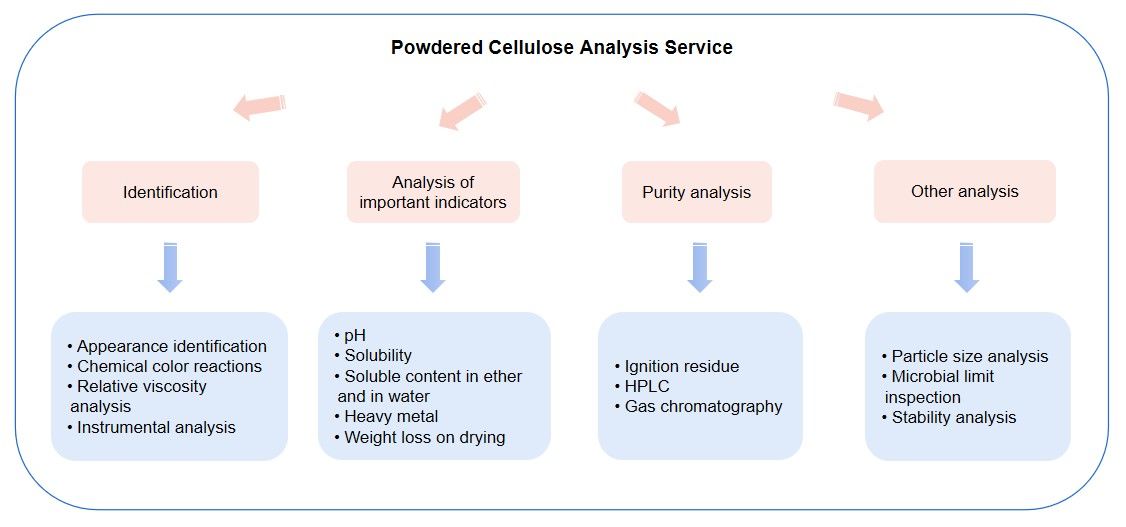
CD BioGlyco offers a wide range of Pharmaceutical and Biological Analysis Services. With our advanced technology and experienced experts, we conduct a comprehensive evaluation of the properties and functionality of powdered cellulose. Powdered cellulose is a form of cellulose, which is made from cellulose. It is a substance with the same properties as cellulose and microcrystalline cellulose. It has wide applications in the pharmaceutical field as a pharmaceutical excipient. Powdered cellulose is a white or nearly white, odorless, tasteless powder that is non-toxic and non-irritating. Its molecular weight varies as the length of the molecular chain varies. The following is a detailed introduction to our analysis services for powdered cellulose.

- Identification
We use a variety of identification methods to ensure the authenticity and accuracy of powdered cellulose.
- Appearance identification: We observe the color, shape, and texture of powdered cellulose with the naked eye to initially determine whether it meets the standards.
- Chemical color reactions: We verify the chemical properties of powdered cellulose through specific chemical color reactions.
- Relative viscosity analysis: We use a viscometer to test the kinematic viscosity and calculate the relative viscosity. Then, it is judged whether the quality of powdered cellulose meets the standard by comparing it with the intrinsic viscosity table.
- Instrumental analysis: We use infrared spectroscopy (IR), nuclear magnetic resonance (NMR), and mass spectrometry (MS) to analyze the molecular structure of powdered cellulose.
- Analysis of important indicators
We strictly control and analyze multiple important indicators of powdered cellulose to ensure its quality is stable and reliable.
- pH: We use a pH meter to measure the pH of powdered cellulose to ensure it meets the specified pH range.
- Solubility: We tested the solubility of powdered cellulose in different solvents to evaluate its suitability for use in pharmaceutical formulations.
- Soluble content in ether and water: When it comes to ether and water-soluble matter content, we measure the soluble content of powdered cellulose in ether and water through a specific extraction method.
- Weight loss on drying: We use the drying method to measure the weight loss of powdered cellulose under specific conditions to determine its degree of dryness.
- Heavy metals: We use atomic absorption spectrometry or inductively coupled plasma-MS to determine the heavy metal content in powdered cellulose.
- Purity analysis
Purity is one of the important quality indicators of powdered cellulose as a pharmaceutical excipient. We use multiple methods to analyze its purity comprehensively.
- Ignition residue: We ignite powdered cellulose at high temperatures and measure its residue content to evaluate its purity.
- High-performance liquid chromatography (HPLC): We use HPLC to separate and detect powdered cellulose and analyze its purity and impurity content.
- Gas chromatography: We use gas chromatography to separate and measure the volatile components in powdered cellulose to assess its purity.
- Other analysis
In addition to the above analysis services, we also provide the following other analysis services to meet the different needs of our clients:
- Particle size analysis: We use a laser particle size analyzer to analyze the particle size distribution of powdered cellulose to evaluate its particle size and uniformity.
- Microbial limit inspection: We conduct microbial limit inspection on powdered cellulose to ensure that it meets the microbial limit standards.
- Stability analysis: We conduct long-term stability studies on powdered cellulose under different conditions to evaluate its stability and shelf life.
Publication Data
Technology: Characterization of the physicochemical properties of cellulose
Journal: Nanomaterials
IF: 3.791
Published: 2020
Results: The authors capitalized on the biodiversity of Ecuador to assess microcrystalline cellulose derived from borojó (Alibertia patinoi), an indigenous plant, for its potential as a solid dosage formulation excipient. Initially, they conducted scanning electron microscopy (SEM), Fourier-transform infrared spectroscopy, and X-ray diffraction (XRD) to juxtapose the structure and attributes of the extracted cellulose with two benchmark commercial variants. Subsequently, the authors implemented quality checks to determine the isolate's suitability as an excipient, including fluidity, hardness, friability, and disintegration tests. The cellulose extracted from the indigenous plant demonstrated characteristics akin to commercial and microcrystalline cellulose, establishing it as a potential excipient for the pharmaceutical sector. Finally, the authors carried out a dissolution test and deduced that all tablets displayed a rapid release time of the active principle.
Fig.1 Fourier-transform infrared spectra of powders of the three excipients. (Viera-Herrera, et al., 2020)
Frequently Asked Questions
- What are the functions of powdered cellulose as a pharmaceutical excipient?
Powdered cellulose is primarily used as a diluent in tablets and hard capsules to increase the volume of formulations that contain too little drug. In addition, it is used to reduce the settling rate of oily suspension-filling liquids in soft capsules. At the same time, powdered cellulose is also used as an excipient for powders, a suspending agent for oral aqueous suspensions, and to reduce drug sedimentation in the preparation of suppositories.
It is worth noting that, unlike the properties of general powdered cellulose, powdered cellulose with low crystallinity can be used as an excipient for direct compression.
- What impact does the weight loss on drying of powdered cellulose have on pharmaceutical formulations?
The weight loss on drying of powdered cellulose is one of the important indicators to evaluate its drying degree. Excessive weight loss on drying may cause problems such as moisture absorption and agglomeration in pharmaceutical preparations during storage and use, affecting the stability and effectiveness of the drug. Therefore, by measuring the drying weight loss of powdered cellulose, we judge whether its drying degree meets the requirements, thereby ensuring the quality and stability of pharmaceutical preparations. At the same time, the results of weight loss on drying can also provide an important reference for the preparation process of pharmaceutical preparations.
At CD BioGlyco, we understand the importance of Pharmaceutical Excipient Analysis for pharmaceutical preparations. For the pharmaceutical excipient powdered cellulose, we provide comprehensive analytical services to ensure that its quality meets standards. We always adhere to client-centeredness and provide clients with high-quality and efficient services. Please feel free to contact us if you are interested in our powdered cellulose analysis service.
Reference
- Viera-Herrera, C.; et al. Microcrystalline cellulose extracted from native plants as an excipient for solid dosage formulations in drug delivery. Nanomaterials. 2020, 10(5): 975.
Quick Links
Resources
- Fatty Acid Analysis
- Omega-3 Fatty Acid Analysis
- Omega-6 Fatty Acid Analysis
- Esterified Fatty Acid Analysis
- Saturated Fatty Acid Analysis
- Straight-chain Fatty Acid Analysis
- Volatile Fatty Acid Analysis
- Cis/Trans Fatty Acid Analysis
- Whole-Cell Fatty Acid Analysis
- Free Fatty Acid Analysis
- Total Fatty Acid Analysis
- Long-chain Fatty Acid Analysis
- Short-chain Fatty Acid Analysis
- Glycosylation Inhibitor Development
- Metabolic Interconversion Inhibitor Development
- N-Glycosylation Inhibitor Development
- O-Glycosylation Inhibitor Development
- O-GalNAc Inhibitor Development
- Core 1 Inhibitor Development
- Core 2 Inhibitor Development
- Core 3 Inhibitor Development
- Core 4 Inhibitor Development
- Sialyl-Tn Antigen Inhibitor Development
- Sialyl-T Antigen Inhibitor Development
- SLex Antigen Inhibitor Development
- Blocking O-Glycan-Protein Interaction Inhibitor Development
- Capping Modification Inhibitor Development
- Postsynthetic Glycan Modification Inhibitor Development
- GAG Inhibitor Development
- GSL Inhibitor Development
- GPI Anchor Inhibitor Development
- O-GlcNAc Inhibitor Development
- Lipidomics Analysis Services
- Carbohydrate Separation, Purification and Analysis
- Carbohydrate Metabolism Analysis
- Monosaccharide Analysis Service
- Mannitol Analysis Service
- Mannose Analysis Service
- Fructose Analysis Service
- Xylose Analysis Service
- Glucose Analysis Service
- Sorbitol Analysis Service
- Galactose Analysis Service
- Fucose Analysis Service
- Arabinose Analysis Service
- Ribose Analysis Service
- Rhamnose Analysis Service
- Galacturonic Acid Analysis Service
- Glucuronic Acid Analysis Service
- Galactosamine Analysis Service
- Mannuronic Acid Analysis Service
- Guluronic Acid Analysis Service
- Mannosamine Analysis Service
- Glucosamine Analysis Service
- Muramic Acid Analysis Service
- N-Acetylglucosamine Analysis Service
- Tagatose Analysis Service
- Talose Analysis Service
- Psicose Analysis Service
- Sorbose Analysis Service
- Disaccharide Analysis Service
- Maltose Analysis Service
- Isomaltose Analysis Service
- Lactose Analysis Service
- Sucrose Analysis Service
- Trehalose Analysis Service
- Melibiose Analysis Service
- Turanose Analysis Service
- Lactulose Analysis Service
- Maltitol Analysis Service
- Lactitol Analysis Service
- Epilactose Analysis Service
- Cellobiose Analysis Service
- Allolactose Analysis Service
- Maltotriose Analysis Service
- Isomaltulose Analysis Service
- Oligosaccharide Analysis Service
- Raffinose Analysis Service
- Stachyose Analysis Service
- Mannan Oligosaccharides Analysis Service
- Xylooligosaccharide Analysis Service
- Fructooligosaccharide Analysis Service
- Galactooligosaccharide Analysis Service
- Chitooligosaccharide Analysis Service
- Arabinoxylooligosaccharide Analysis Service
- Pectic Oligosaccharide Analysis Service
- Maltooligosaccharide Analysis Service
- Isomaltooligosaccharide Analysis Service
- Polysaccharide Analysis Service
- Sea Cucumber Polysaccharide Analysis Service
- Lycium barbarum Polysaccharide Analysis Service
- Polygonatum Polysaccharide Analysis Service
- Glycogen Analysis Service
- Glucomannan Analysis Service
- Chitin/Chitosan Analysis Service
- Glucan Analysis Service
- Galactan Analysis Service
- Xylan Analysis Service
- Mannan Analysis Service
- Arabinan Analysis Service
- Rhamnan Analysis Service
- Fucoidan Analysis Service
- Galactomannan Analysis Service
- Glycosaminoglycan Analysis Service
- Monosaccharide Analysis Service
- Custom Glycosylation Service
- Sialic Acid Analysis Service
- Strategies for Sialic Acid Analysis
- Aberrant Sialylation in Cancers
- Sialic Acid Analysis in Pancreatic Cancer
- Sialic Acid Analysis in Laryngeal Cancer
- Sialic Acid Analysis in Oral Cancer
- Sialic Acid Analysis in Cholangiocarcinoma
- Sialic Acid Analysis in Cervical Cancer
- Sialic Acid Analysis in Leukemia
- Sialic Acid Analysis in Colorectal Cancer
- Sialic Acid Analysis in Lung Cancer
- Sialic Acid Analysis in Breast Cancer
- Sialic Acid Analysis in Endometrial Cancer
- Sialic Acid Analysis in Stomach Cancer
- Sialic Acid Analysis in Thyroid Cancer
- Sialic Acid Analysis in Malignant Melanoma
- Sialic Acid Analysis in Prostate Cancer
- Sialic Acid Analysis in Ovarian Cancer
- Custom Sialyl Tumor Antigen Production Service
- High-Throughput Glycan Screening Service
- HTS of Important Glycans
- HTS of Glycan Derivatives
- HTS for Glycan-Binding Proteins
- HTS for Compounds That Alter Muscle Cell Glycosylation
- HT Glycan Screening for Antibodies
- HT Glycan Screening for Glycoengineered Cell Line
- HTS for Human Galactokinase Inhibitors
- HTS for Inhibitors of Sialyl- and Fucosyltransferases
- HT Automated Micro-Permethylation for Glycan Structure Analysis
- Strategies for HT Glycan Screening
- HT Glycan Screening Using Microchip-Based Assay
- HT Glycan Screening Using Miniature Pig Kidney N-Glycan-Immobilized Beads
- HT Glycan Screening Using An Automated LC-MS-Based Solution
- HT Glycan Screening Using Mass Spectrometry
- HT Glycan Screening Using UHPLC-FLD
- HT Glycan Screening Using 19F-Labeled Probes
- HT Glycan Screening Using Hydrophilic Interaction Chromatography
- HT Glycan Screening Using MALDI-TOF-MS
- HT Glycan Screening Using CE-MS
- HT Glycan Screening Using HPLC-Based Analysis
- HT Glycan Screening Using ESI-MSn
- HT Glycan Screening Using a DNA Sequencer
- HT Glycan Screening Using Glycan Microarrays
- HT Glycan Screening Using a 96-Well Plate Platform
- Characterization of Glycosylation in Drugs
- Glycobiology of Human Milk
- Anti-glycan Antibody Development
- Lectin Production Service
- Pharmaceutical and Biological Analysis Service
- Pharmaceutical Analysis Service
- Oral Rehydration Salt Analysis Service
- Pentoxifylline and Glucose Injection Analysis Service
- Xylitol Analysis Service
- Ulinastatin Analysis Service
- Deslanoside Analysis Service
- Glycerol Fructose and Sodium Chloride Injection Analysis Service
- Josamycin Propionate Analysis Service
- Dextran Analysis Service
- Iron Dextran Analysis Service
- Capecitabine Analysis Service
- Metildigoxin Analysis Service
- Metronidazole and Glucose Injection Analysis Service
- Gadobenate Dimeglumine Injection Analysis Service
- Voglibose Analysis Service
- Inosine and Glucose Injection Analysis Service
- Heparin Calcium Analysis Service
- Heparin Sodium Analysis Service
- Acarbose Analysis Service
- Amikacin Analysis Service
- Aciclovir and Glucose Injection Analysis Service
- Streptomycin Injection Analysis Service
- Erythromycin Lactobionate Analysis Service
- Saccharated Pepsin Analysis Service
- Compound Sodium Lactate and Glucose Injection Analysis Service
- Tylosin Analysis Service
- Compound Calcium Gluconate Oral Solution Analysis Service
- Cytarabine Hydrochloride for Injection Analysis Service
- Oxystarch Analysis Service
- Glucosamine Indometacin Enteric Capsule Analysis Service
- Glucose and Sodium Chloride Injection Analysis Service
- Ferrous GIuconate Analysis Service
- Calcium Gluconate Analysis Service
- Calcium Gluconate and Sodium Chloride Injection Analysis Service
- Zinc Gluconate Analysis Service
- Sodium Stibogluconate Analysis Service
- Chlorhexidine Gluconate Analysis Service
- Sodium Stibogluconate Injection Analysis Service
- Kanamycin Sulfate Analysis Service
- Gentamicin Sulfate Analysis Service
- Isepamicin Sulfate Analysis Service
- Amikacin Sulfate Analysis Service
- Chondroitin Sulfate Sodium Analysis Service
- Etimicin Sulfate Analysis Service
- Ribostamycin Sulfate Analysis Service
- Streptomycin Sulfate Analysis Service
- Neomycin Sulfate Analysis Service
- Sucralfate Analysis Service
- Potassium Chloride and Glucose Injection Analysis Service
- Anticoagulant Citrate Dextrose Analysis Service
- Aurothioglucose Analysis Service
- Calcium Gluceptate Analysis Service
- Calcium Lactobionate Analysis
- Calcium Levulinate Analysis
- Oxidized Cellulose Analysis
- Oxidized Regenerated Cellulose Analysis
- Cellulose Sodium Phosphate Analysis
- Chlorpromazine Hydrochloride Syrup Analysis
- Clofibrate Capsule Analysis
- Copper Gluconate Analysis
- Cytarabine Analysis
- Dextrose Analysis
- Diatrizoate Meglumine Analysis
- Digitoxin Analysis
- Digoxin Analysis
- Dihydrostreptomycin Sulfate Analysis
- Dirithromycin Analysis
- Enoxaparin Sodium Analysis
- Erythromycin Analysis
- Erythromycin Estolate Analysis
- Erythromycin Ethylsuccinate Analysis
- Sterile Erythromycin Gluceptate Analysis
- Ferrous Sulfate Syrup Analysis
- Fludeoxyglucose F 18 Injection Analysis
- Beta Glucan Analysis
- Gentamicin and Prednisolone Acetate Ophthalmic Ointment Analysis
- Gluconolactone Analysis
- Heparin Lock Flush Solution Analysis
- Anticoagulant Heparin Solution Analysis
- Hyaluronidase Injection Analysis
- Iodipamide Meglumine Injection Analysis
- Iron Sorbitex Injection Analysis
- Iron Sucrose Injection Analysis
- Magnesium Gluconate Analysis
- Manganese Gluconate Analysis
- Meglumine Analysis
- Natamycin Analysis
- Quinidine Gluconate Analysis
- Sisomicin Sulfate Analysis
- Sodium Gluconate Analysis
- Biological Evaluation
- Typhoid Vaccine Evaluation
- RNA-Cell Binding Interaction Analysis Services
- Group A Meningococcal Polysaccharide Vaccine Evaluation
- Off-Target Activity Assessment Service
- 23-Valent Pneumococcal Polysaccharide Vaccine Evaluation
- Conjugate Potency Assay Service
- H. influenzae Type b Conjugate Vaccine Evaluation
- ADME Profiling Service
- Poliomyelitis Vaccine in Dragee Candy Evaluation
- Human Hepatitis B Immunoglobulin Evaluation
- Human Rabies Immunoglobulin Evaluation
- Human Tetanus Immunoglobulin Evaluation
- Human Immunoglobulin Evaluation
- Anti-human T Lymphocyte Rabbit Immunoglobulin Evaluation
- Human Fibrinogen Evaluation
- Human Thrombin Evaluation
- Conbercept Ophthalmic Injection Evaluation
- BCG-PPD Evaluation
- BR-PPD Evaluation
- Pharmaceutical Excipient Analysis
- Ethylcellulose Analysis Service
- Sucralose Analysis
- Wheat Starch Analysis
- Potato Starch Analysis
- Tapioca Starch Analysis
- Maize Starch Analysis
- Compressible Sugar Analysis
- Soluble Starch Analysis
- Methylcellulose Analysis
- Guar Gum Analysis
- Tragacanth Analysis
- Croscarmellose Sodium Analysis
- Cellacefate Analysis
- Maltodextrin Analysis
- Low-substituted Hydroxypropyl Cellulose Analysis
- Alpha Cyclodextrin Analysis
- Beta Cyclodextrin Analysis
- Gamma Cyclodextrin Analysis
- Arabino Galactan Analysis
- Acacia Analysis
- Pectin Analysis
- Powdered Cellulose Analysis
- Alginic Acid Analysis
- Sodium Alginate Analysis
- Pregelatinized Hydroxypropyl Starch Analysis
- Pregelatinized Starch Analysis
- Xanthan Gum Analysis
- Steviol Glycoside Analysis
- Hydroxyethyl Cellulose Analysis
- Hypromellose Analysis
- Hydroxypropyl Cellulose Analysis
- Hydroxypropyl Betadex Analysis
- Vacant HydroxypropyI Starch Capsule Analysis
- Dextrate Analysis
- Agar Analysis
- Calcium Saccharate Analysis
- Caramel Analysis
- Pullulan Analysis
- Microcrystalline Cellulose Analysis
- Carboxymethylcellulose Calcium Analysis
- Carboxymethylcellulose Sodium Analysis
- Sodium Starch Glycolate Analysis
- Polydextrose Analysis
- Sucrose Octaacetate Analysis
- Sugar Sphere Analysis
- Sucrose Stearate Analysis
- Pea Starch Analysis
- Cellulose Acetate Analysis
- Hypromellose Acetate Succinate Analysis
- Dextrin Analysis
- Sodium Starch Phosphate Analysis
- Gellan Analysis
- Hyaluronan Analysis
- Pharmaceutical Analysis Service
- Carbohydrate-based Biodegradable Material Development
- Monosaccharide-based Biodegradable Material Development
- Disaccharide-based Biodegradable Material Development
- Oligosaccharide-based Biodegradable Material Development
- Polysaccharide-based Biodegradable Material Development
- Cellulose-based Biodegradable Material Development
- Starch-based Biodegradable Material Development
- Chitosan-based Biodegradable Material Development
- Dextran-based Biodegradable Material Development
- Hyaluronic Acid-based Biodegradable Material Development
- Other Polysaccharide-based Biodegradable Material Development
- Modification of Biodegradable Polysaccharide
- Characterization of Polysaccharide-based Biodegradable Material
- Applications of Polysaccharide-based Biodegradable Material
- Glycobiology Disease Model Development Service
- Techniques for In Vivo Glycobiology Disease Model Development
- Gene Editing-based In Vivo Glycobiology Disease Model Development Service
- Transgenic-based In Vivo Glycobiology Disease Model Development Service
- Embryo Implantation and Cultivation-based In Vivo Glycobiology Disease Model Development Service
- Selective Breeding-based In Vivo Glycobiology Disease Model Development Service
- Gene Expression-based In Vivo Glycobiology Disease Model Development Service
- Glycobiology Disease Model Construction Service
- Custom In Vivo Glycobiology Disease Model Service
- In Vivo Glycobiology Disease Model Screening Service
- In Vitro Glycobiology Disease Model Screening Service
- HeLa Cells-based In Vivo Screening Service
- 3T3-L1 Cells-based In Vitro Screening Service
- Muscle Cells-based In Vitro Screening Service
- Hepatocyte-based In Vitro Screening Service
- Insulin Target Cells-based In Vitro Screening Service
- Intestinal Cells-based In Vitro Screening Service
- THP-1 Monocyte-based In Vitro Screening Service
- Vero Cells-based In Vitro Screening Service
- Techniques for In Vivo Glycobiology Disease Model Development
- Fatty Acid Analysis


