Hydroxyethyl Cellulose Analysis Service
Unlocking the Potential of Hydroxyethyl Cellulose (HEC) with Precision Analysis
HEC, with the chemical formula (C2H6O2)n, is a white or yellowish, odorless, non-toxic fibrous or powdery solid. It is usually prepared by etherification of basic cellulose and ethylene oxide and belongs to the class of non-ionic soluble cellulose ethers. As a pharmaceutical excipient, HEC has high surface activity in solid and liquid drug formulations, which provides thickening, emulsification, film-forming, and other effects for drugs.
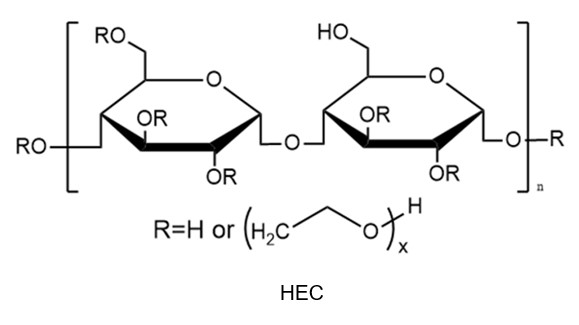
With best-in-class Pharmaceutical Excipient Analysis technology and in-depth experience, CD BioGlyco provides high-quality HEC analysis services.

- Identification
- Adding water to HEC results in a colloidal solution, which remains clear when heated.
- When HEC is dissolved in water and evaporated, a film is formed.
- A yellowish flocculent precipitate appears when dilute acetic acid and ellagic acid solution are added to the aqueous solution of HEC. Moreover, this precipitate can be dissolved in dilute ammonia.
- The color of the solution changes to orange when phenol and sulphuric acid are added to an aqueous solution of HEC.
- pH
The acidity and alkalinity of the HEC are measured by a pH meter. The pH of the HEC should be 6.0 to 8.5. - Chloride
A suitable amount of silver nitrate is added to an aqueous solution of HEC and a standard sodium chloride solution and the phenomena of both are compared. If the phenomena are the same, it means that HEC contains chloride. - Nitrate
Electrochemical method: We use nitrate electrode as indicator electrode and silver-silver chloride electrode as reference electrode to make a standard curve of potential E (mV) and nitrate concentration. Then, the potential E (mV) of the HEC solution is tested and the amount of nitrate in the HEC is calculated. - Glyoxal
After dissolving HEC in anhydrous ethanol, an acetic acid solution of methylbenzothiazolone hydrazone hydrochloride is added to it and the color of this solution is compared with that of a standard solution of glyoxal. If the colors are the same, it is proved that HEC contains glyoxal. - Ethylene oxide
Gas chromatography (GC): GC is used to detect the presence of ethylene oxide in HEC by using polydimethylsiloxane as a stationary liquid. - Loss on drying
Dry HEC at 105°C for 3 hours with a weight loss of not more than 10.0%. - Incineration residue
The HEC is sufficiently incinerated to leave a residue of not more than 5.0%.
Publication Data
Technology: Fourier transform infrared spectroscopy (FTIR), Nuclear magnetic resonance (NMR) analysis, Cytotoxicity experiments
Journal: European Journal of Pharmaceutical Sciences
IF: 4.6
Published: 2022
Results: Firstly, the authors modified HEC by esterification using N-chlorobetaine chloride and characterized it using FTIR, NMR, and electrochemical methods. The authors also performed enzymatic degradation and cytotoxicity experiments on the modified HEC. The structure of HEC was analyzed by FTIR and NMR and had a zeta potential of 0.37 ± 0.19 mV. Enzymatic degradation studies showed that lipase was able to cleave the betaine fragments from HEC. Cytotoxicity studies showed no toxicity of betaine-modified HEC at concentrations up to 0.3%. In summary, the betaine-modified HEC may be a valuable biodegradable mucosal adhesion polymer.
Fig.1 FTIR of unmodified HEC and betaine-modified HEC. (Efiana, et al., 2022)
Frequently Asked Questions
- What are the advantages of HEC?
High thickening: HEC has an excellent thickening effect. Lower dosages can be used to improve the economy of the formulation and at the same time increase the storage time of the product.
Excellent rheology: HEC's aqueous solutions are non-Newtonian systems, and the solutions have a property known as thixotropy. The systems maintain a medium viscosity when poured, resulting in excellent flow and no splashing.
Dispersibility and solubility: With proper surface treatment, HEC provides good regulation of the dissolution rate and viscosity rise of the product.
Storage stability: HEC has good anti-mold properties and provides sufficient product storage time. - What to consider in using HEC?
Hygroscopicity: HEC has hygroscopic properties. The water content of HEC exposed to air will increase.
Explosiveness: Under a certain ratio of HEC and dust powder, HEC will explode when it meets open flame in the air. Therefore, it should be operated appropriately and dust powder should be avoided in the atmosphere as much as possible.
Advantages
- Our service team has extensive experience in the field of, ensuring that we help our clients complete their projects efficiently.
- We focus on quality management and provide high-quality HEC analysis services to ensure that our clients receive accurate data and reliable analysis results.
- We follow up on the latest Pharmaceutical and Biological Evaluation research results and technological advances to provide advanced technical support for HEC analysis.
- Our professional researchers and technical team, who master advanced technologies and complex analysis methods, perform HEC analysis effectively.
CD BioGlyco provides tailor-made solutions for the different pharmaceutical excipient analysis to meet the different research requirements of our clients. We have experienced researchers to provide you with professional HEC analysis services. We welcome you to feel free to contact us at any time if you would like to learn more about HEC.
Reference
- Efiana, N.A.; et al. Betaine-modified hydroxyethyl cellulose (HEC): a biodegradable mucoadhesive polysaccharide exhibiting quaternary ammonium substructures. European Journal of Pharmaceutical Sciences. 2022, 180: 106313.
- Fatty Acid Analysis
- Omega-3 Fatty Acid Analysis
- Omega-6 Fatty Acid Analysis
- Esterified Fatty Acid Analysis
- Saturated Fatty Acid Analysis
- Straight-chain Fatty Acid Analysis
- Volatile Fatty Acid Analysis
- Cis/Trans Fatty Acid Analysis
- Whole-Cell Fatty Acid Analysis
- Free Fatty Acid Analysis
- Total Fatty Acid Analysis
- Long-chain Fatty Acid Analysis
- Short-chain Fatty Acid Analysis
- Glycosylation Inhibitor Development
- Metabolic Interconversion Inhibitor Development
- N-Glycosylation Inhibitor Development
- O-Glycosylation Inhibitor Development
- O-GalNAc Inhibitor Development
- Core 1 Inhibitor Development
- Core 2 Inhibitor Development
- Core 3 Inhibitor Development
- Core 4 Inhibitor Development
- Sialyl-Tn Antigen Inhibitor Development
- Sialyl-T Antigen Inhibitor Development
- SLex Antigen Inhibitor Development
- Blocking O-Glycan-Protein Interaction Inhibitor Development
- Capping Modification Inhibitor Development
- Postsynthetic Glycan Modification Inhibitor Development
- GAG Inhibitor Development
- GSL Inhibitor Development
- GPI Anchor Inhibitor Development
- O-GlcNAc Inhibitor Development
- Lipidomics Analysis Services
- Carbohydrate Separation, Purification and Analysis
- Carbohydrate Metabolism Analysis
- Monosaccharide Analysis Service
- Mannitol Analysis Service
- Mannose Analysis Service
- Fructose Analysis Service
- Xylose Analysis Service
- Glucose Analysis Service
- Sorbitol Analysis Service
- Galactose Analysis Service
- Fucose Analysis Service
- Arabinose Analysis Service
- Ribose Analysis Service
- Rhamnose Analysis Service
- Galacturonic Acid Analysis Service
- Glucuronic Acid Analysis Service
- Galactosamine Analysis Service
- Mannuronic Acid Analysis Service
- Guluronic Acid Analysis Service
- Mannosamine Analysis Service
- Glucosamine Analysis Service
- Muramic Acid Analysis Service
- N-Acetylglucosamine Analysis Service
- Tagatose Analysis Service
- Talose Analysis Service
- Psicose Analysis Service
- Sorbose Analysis Service
- Disaccharide Analysis Service
- Maltose Analysis Service
- Isomaltose Analysis Service
- Lactose Analysis Service
- Sucrose Analysis Service
- Trehalose Analysis Service
- Melibiose Analysis Service
- Turanose Analysis Service
- Lactulose Analysis Service
- Maltitol Analysis Service
- Lactitol Analysis Service
- Epilactose Analysis Service
- Cellobiose Analysis Service
- Allolactose Analysis Service
- Maltotriose Analysis Service
- Isomaltulose Analysis Service
- Oligosaccharide Analysis Service
- Raffinose Analysis Service
- Stachyose Analysis Service
- Mannan Oligosaccharides Analysis Service
- Xylooligosaccharide Analysis Service
- Fructooligosaccharide Analysis Service
- Galactooligosaccharide Analysis Service
- Chitooligosaccharide Analysis Service
- Arabinoxylooligosaccharide Analysis Service
- Pectic Oligosaccharide Analysis Service
- Maltooligosaccharide Analysis Service
- Isomaltooligosaccharide Analysis Service
- Polysaccharide Analysis Service
- Sea Cucumber Polysaccharide Analysis Service
- Lycium barbarum Polysaccharide Analysis Service
- Polygonatum Polysaccharide Analysis Service
- Glycogen Analysis Service
- Glucomannan Analysis Service
- Chitin/Chitosan Analysis Service
- Glucan Analysis Service
- Galactan Analysis Service
- Xylan Analysis Service
- Mannan Analysis Service
- Arabinan Analysis Service
- Rhamnan Analysis Service
- Fucoidan Analysis Service
- Galactomannan Analysis Service
- Glycosaminoglycan Analysis Service
- Monosaccharide Analysis Service
- Custom Glycosylation Service
- Sialic Acid Analysis Service
- Strategies for Sialic Acid Analysis
- Aberrant Sialylation in Cancers
- Sialic Acid Analysis in Pancreatic Cancer
- Sialic Acid Analysis in Laryngeal Cancer
- Sialic Acid Analysis in Oral Cancer
- Sialic Acid Analysis in Cholangiocarcinoma
- Sialic Acid Analysis in Cervical Cancer
- Sialic Acid Analysis in Leukemia
- Sialic Acid Analysis in Colorectal Cancer
- Sialic Acid Analysis in Lung Cancer
- Sialic Acid Analysis in Breast Cancer
- Sialic Acid Analysis in Endometrial Cancer
- Sialic Acid Analysis in Stomach Cancer
- Sialic Acid Analysis in Thyroid Cancer
- Sialic Acid Analysis in Malignant Melanoma
- Sialic Acid Analysis in Prostate Cancer
- Sialic Acid Analysis in Ovarian Cancer
- Custom Sialyl Tumor Antigen Production Service
- High-Throughput Glycan Screening Service
- HTS of Important Glycans
- HTS of Glycan Derivatives
- HTS for Glycan-Binding Proteins
- HTS for Compounds That Alter Muscle Cell Glycosylation
- HT Glycan Screening for Antibodies
- HT Glycan Screening for Glycoengineered Cell Line
- HTS for Human Galactokinase Inhibitors
- HTS for Inhibitors of Sialyl- and Fucosyltransferases
- HT Automated Micro-Permethylation for Glycan Structure Analysis
- Strategies for HT Glycan Screening
- HT Glycan Screening Using Microchip-Based Assay
- HT Glycan Screening Using Miniature Pig Kidney N-Glycan-Immobilized Beads
- HT Glycan Screening Using An Automated LC-MS-Based Solution
- HT Glycan Screening Using Mass Spectrometry
- HT Glycan Screening Using UHPLC-FLD
- HT Glycan Screening Using 19F-Labeled Probes
- HT Glycan Screening Using Hydrophilic Interaction Chromatography
- HT Glycan Screening Using MALDI-TOF-MS
- HT Glycan Screening Using CE-MS
- HT Glycan Screening Using HPLC-Based Analysis
- HT Glycan Screening Using ESI-MSn
- HT Glycan Screening Using a DNA Sequencer
- HT Glycan Screening Using Glycan Microarrays
- HT Glycan Screening Using a 96-Well Plate Platform
- Characterization of Glycosylation in Drugs
- Glycobiology of Human Milk
- Anti-glycan Antibody Development
- Lectin Production Service
- Pharmaceutical and Biological Analysis Service
- Pharmaceutical Analysis Service
- Oral Rehydration Salt Analysis Service
- Pentoxifylline and Glucose Injection Analysis Service
- Xylitol Analysis Service
- Ulinastatin Analysis Service
- Deslanoside Analysis Service
- Glycerol Fructose and Sodium Chloride Injection Analysis Service
- Josamycin Propionate Analysis Service
- Dextran Analysis Service
- Iron Dextran Analysis Service
- Capecitabine Analysis Service
- Metildigoxin Analysis Service
- Metronidazole and Glucose Injection Analysis Service
- Gadobenate Dimeglumine Injection Analysis Service
- Voglibose Analysis Service
- Inosine and Glucose Injection Analysis Service
- Heparin Calcium Analysis Service
- Heparin Sodium Analysis Service
- Acarbose Analysis Service
- Amikacin Analysis Service
- Aciclovir and Glucose Injection Analysis Service
- Streptomycin Injection Analysis Service
- Erythromycin Lactobionate Analysis Service
- Saccharated Pepsin Analysis Service
- Compound Sodium Lactate and Glucose Injection Analysis Service
- Tylosin Analysis Service
- Compound Calcium Gluconate Oral Solution Analysis Service
- Cytarabine Hydrochloride for Injection Analysis Service
- Oxystarch Analysis Service
- Glucosamine Indometacin Enteric Capsule Analysis Service
- Glucose and Sodium Chloride Injection Analysis Service
- Ferrous GIuconate Analysis Service
- Calcium Gluconate Analysis Service
- Calcium Gluconate and Sodium Chloride Injection Analysis Service
- Zinc Gluconate Analysis Service
- Sodium Stibogluconate Analysis Service
- Chlorhexidine Gluconate Analysis Service
- Sodium Stibogluconate Injection Analysis Service
- Kanamycin Sulfate Analysis Service
- Gentamicin Sulfate Analysis Service
- Isepamicin Sulfate Analysis Service
- Amikacin Sulfate Analysis Service
- Chondroitin Sulfate Sodium Analysis Service
- Etimicin Sulfate Analysis Service
- Ribostamycin Sulfate Analysis Service
- Streptomycin Sulfate Analysis Service
- Neomycin Sulfate Analysis Service
- Sucralfate Analysis Service
- Potassium Chloride and Glucose Injection Analysis Service
- Anticoagulant Citrate Dextrose Analysis Service
- Aurothioglucose Analysis Service
- Calcium Gluceptate Analysis Service
- Calcium Lactobionate Analysis
- Calcium Levulinate Analysis
- Oxidized Cellulose Analysis
- Oxidized Regenerated Cellulose Analysis
- Cellulose Sodium Phosphate Analysis
- Chlorpromazine Hydrochloride Syrup Analysis
- Clofibrate Capsule Analysis
- Copper Gluconate Analysis
- Cytarabine Analysis
- Dextrose Analysis
- Diatrizoate Meglumine Analysis
- Digitoxin Analysis
- Digoxin Analysis
- Dihydrostreptomycin Sulfate Analysis
- Dirithromycin Analysis
- Enoxaparin Sodium Analysis
- Erythromycin Analysis
- Erythromycin Estolate Analysis
- Erythromycin Ethylsuccinate Analysis
- Sterile Erythromycin Gluceptate Analysis
- Ferrous Sulfate Syrup Analysis
- Fludeoxyglucose F 18 Injection Analysis
- Beta Glucan Analysis
- Gentamicin and Prednisolone Acetate Ophthalmic Ointment Analysis
- Gluconolactone Analysis
- Heparin Lock Flush Solution Analysis
- Anticoagulant Heparin Solution Analysis
- Hyaluronidase Injection Analysis
- Iodipamide Meglumine Injection Analysis
- Iron Sorbitex Injection Analysis
- Iron Sucrose Injection Analysis
- Magnesium Gluconate Analysis
- Manganese Gluconate Analysis
- Meglumine Analysis
- Natamycin Analysis
- Quinidine Gluconate Analysis
- Sisomicin Sulfate Analysis
- Sodium Gluconate Analysis
- Biological Evaluation
- Typhoid Vaccine Evaluation
- RNA-Cell Binding Interaction Analysis Services
- Group A Meningococcal Polysaccharide Vaccine Evaluation
- Off-Target Activity Assessment Service
- 23-Valent Pneumococcal Polysaccharide Vaccine Evaluation
- Conjugate Potency Assay Service
- H. influenzae Type b Conjugate Vaccine Evaluation
- ADME Profiling Service
- Poliomyelitis Vaccine in Dragee Candy Evaluation
- Human Hepatitis B Immunoglobulin Evaluation
- Human Rabies Immunoglobulin Evaluation
- Human Tetanus Immunoglobulin Evaluation
- Human Immunoglobulin Evaluation
- Anti-human T Lymphocyte Rabbit Immunoglobulin Evaluation
- Human Fibrinogen Evaluation
- Human Thrombin Evaluation
- Conbercept Ophthalmic Injection Evaluation
- BCG-PPD Evaluation
- BR-PPD Evaluation
- Pharmaceutical Excipient Analysis
- Ethylcellulose Analysis Service
- Sucralose Analysis
- Wheat Starch Analysis
- Potato Starch Analysis
- Tapioca Starch Analysis
- Maize Starch Analysis
- Compressible Sugar Analysis
- Soluble Starch Analysis
- Methylcellulose Analysis
- Guar Gum Analysis
- Tragacanth Analysis
- Croscarmellose Sodium Analysis
- Cellacefate Analysis
- Maltodextrin Analysis
- Low-substituted Hydroxypropyl Cellulose Analysis
- Alpha Cyclodextrin Analysis
- Beta Cyclodextrin Analysis
- Gamma Cyclodextrin Analysis
- Arabino Galactan Analysis
- Acacia Analysis
- Pectin Analysis
- Powdered Cellulose Analysis
- Alginic Acid Analysis
- Sodium Alginate Analysis
- Pregelatinized Hydroxypropyl Starch Analysis
- Pregelatinized Starch Analysis
- Xanthan Gum Analysis
- Steviol Glycoside Analysis
- Hydroxyethyl Cellulose Analysis
- Hypromellose Analysis
- Hydroxypropyl Cellulose Analysis
- Hydroxypropyl Betadex Analysis
- Vacant HydroxypropyI Starch Capsule Analysis
- Dextrate Analysis
- Agar Analysis
- Calcium Saccharate Analysis
- Caramel Analysis
- Pullulan Analysis
- Microcrystalline Cellulose Analysis
- Carboxymethylcellulose Calcium Analysis
- Carboxymethylcellulose Sodium Analysis
- Sodium Starch Glycolate Analysis
- Polydextrose Analysis
- Sucrose Octaacetate Analysis
- Sugar Sphere Analysis
- Sucrose Stearate Analysis
- Pea Starch Analysis
- Cellulose Acetate Analysis
- Hypromellose Acetate Succinate Analysis
- Dextrin Analysis
- Sodium Starch Phosphate Analysis
- Gellan Analysis
- Hyaluronan Analysis
- Pharmaceutical Analysis Service
- Carbohydrate-based Biodegradable Material Development
- Monosaccharide-based Biodegradable Material Development
- Disaccharide-based Biodegradable Material Development
- Oligosaccharide-based Biodegradable Material Development
- Polysaccharide-based Biodegradable Material Development
- Cellulose-based Biodegradable Material Development
- Starch-based Biodegradable Material Development
- Chitosan-based Biodegradable Material Development
- Dextran-based Biodegradable Material Development
- Hyaluronic Acid-based Biodegradable Material Development
- Other Polysaccharide-based Biodegradable Material Development
- Modification of Biodegradable Polysaccharide
- Characterization of Polysaccharide-based Biodegradable Material
- Applications of Polysaccharide-based Biodegradable Material
- Glycobiology Disease Model Development Service
- Techniques for In Vivo Glycobiology Disease Model Development
- Gene Editing-based In Vivo Glycobiology Disease Model Development Service
- Transgenic-based In Vivo Glycobiology Disease Model Development Service
- Embryo Implantation and Cultivation-based In Vivo Glycobiology Disease Model Development Service
- Selective Breeding-based In Vivo Glycobiology Disease Model Development Service
- Gene Expression-based In Vivo Glycobiology Disease Model Development Service
- Glycobiology Disease Model Construction Service
- Custom In Vivo Glycobiology Disease Model Service
- In Vivo Glycobiology Disease Model Screening Service
- In Vitro Glycobiology Disease Model Screening Service
- HeLa Cells-based In Vivo Screening Service
- 3T3-L1 Cells-based In Vitro Screening Service
- Muscle Cells-based In Vitro Screening Service
- Hepatocyte-based In Vitro Screening Service
- Insulin Target Cells-based In Vitro Screening Service
- Intestinal Cells-based In Vitro Screening Service
- THP-1 Monocyte-based In Vitro Screening Service
- Vero Cells-based In Vitro Screening Service
- Techniques for In Vivo Glycobiology Disease Model Development
- Fatty Acid Analysis


