


Research Background
In nature, the ability to catalyze reactions has long been considered the exclusive domain of proteins and ribozymes. However, a recent breakthrough study demonstrates that Rationally Designed Carbohydrate Molecules can also efficiently catalyze chemical reactions. This achievement was published on February 26, 2025, in Nature by Martina Delbianco and Kaimeng Liu from the Max Planck Institute of Colloids and Interfaces. The article reports for the first time a glycan foldamer capable of catalyzing the Pictet–Spengler reaction, not only expanding the design boundaries of functional oligomers but also providing a new perspective on the potential catalytic roles of carbohydrates in biological systems.
Inspiration: From Natural Glycans to Artificial Catalytic Scaffolds
The research team's design inspiration came from the widely existing Sialyl Lewis X Antigen in nature. This glycan structure has a rigid turn motif composed of galactose (Gal), N-acetylglucosamine (GlcNAc), and fucose (Fuc), and its folded conformation is stabilized by an unconventional hydrogen bond.
The researchers made key modifications based on the natural structure:
- Replacing the terminal sialic acid with a β-galactose unit, utilizing its abundant axial C–H bonds on the α-face to specifically recognize aromatic substrates through CH–π interactions.
- Replacing fucose with rhamnose (Rha) to facilitate the installation of catalytic groups on its equatorial hydroxyl group at the C-4 position.
- Simplifying the GlcNAc at the branching point to glucose (Glc), simplifying synthesis while maintaining the folding behavior.
The resulting tetrasaccharide scaffold (4mer-I) can both fold into a stable conformation and possess substrate recognition capabilities.
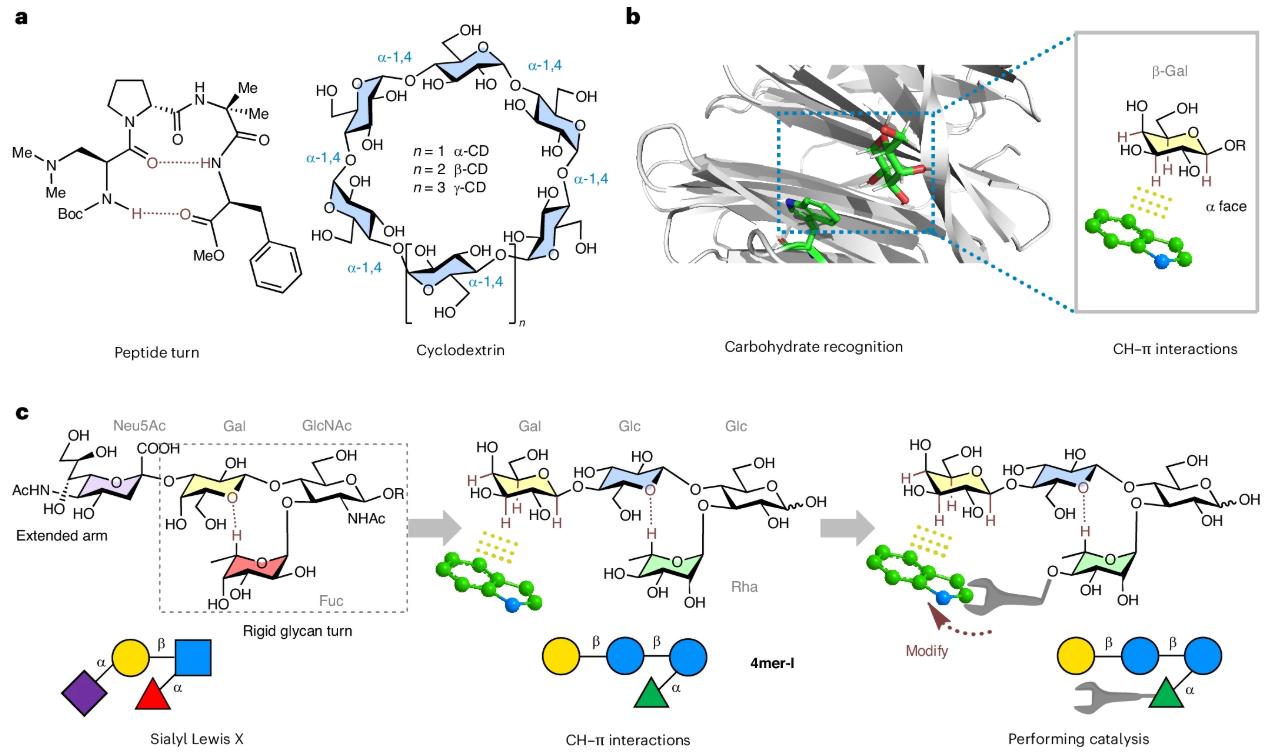
Fig. 1 Design of a functional glycan foldamer. (Liu, et al. 2025)
Key Mechanism: Using the Molecular Hands of Glycans to Grasp Substrates
The CH–π interaction between sugars and aromatic rings is a core binding mechanism in many sugar-binding proteins. This study innovatively reverses this principle, using the CH bonds of the glycan chain as grippers to actively recruit aromatic substrates and position them near the catalytic center. Nuclear magnetic resonance (NMR) experiments showed that 4mer-I adopts a rigid Folded Conformation in solution, with its galactose unit's α-face oriented inwards. When co-incubated with tryptophan (Trp), significant chemical shift changes were observed in the protons of the galactose unit, confirming a specific CH–π interaction. This interaction was significantly weakened when another glucose unit was introduced on the α-face of the Galactose for steric shielding (resulting in 5mer), further validating the specificity of the recognition.
Introduction of Catalysis: Acidic Groups Enable Chemical Reactions
After ensuring substrate recognition capabilities, the research team introduced three different acidic catalytic groups at the C-4 position of rhamnose:
- Phosphate group (4mer-II)
- Sulfate group (4mer-III)
- Carboxylic acid group (4mer-IV)
Synthesis was carried out using efficient automated glycan assembly (AGA) technology, with post-modification performed directly on the solid support, ultimately yielding the target glycan foldamers with a total yield of 28–40%. NMR analysis confirmed that these modifications did not disrupt the overall folded conformation of the glycan chain, and some acidic groups even enhanced the folding rigidity through electronic effects.
Catalytic Validation: Efficient Promotion of Pictet–Spengler Reaction in Aqueous Solution
The Pictet–Spengler reaction was chosen as a model reaction—an important method for constructing alkaloid skeletons, but typically slow in aqueous solutions. In the reaction of tryptophan with propionaldehyde:
- Without a catalyst, the reaction barely proceeded.
- Phosphorylated or sulfated glycans (4mer-II/III) showed poor catalytic effects, possibly due to the large size of the groups hindering substrate access.
- The carboxylated glycan (4mer-IV) performed exceptionally well, achieving an 84% conversion rate and 75% isolated yield under optimized conditions.
Key control experiments demonstrated:
- 3mer, lacking the galactose recognition unit, showed catalytic activity, but at a significantly reduced rate.
- Replacing galactose with glucose (4mer-V, with weakened CH–π interaction) resulted in catalytic efficiency between the two extremes.
This indicates that the CH–π interaction is crucial for accelerating the reaction—it fixes tryptophan near the catalytic carboxylic acid, significantly increasing the reaction probability.
Kinetic analysis further showed that the catalytic pathway of 4mer-IV was significantly faster than that of control groups using small molecule acids such as acetic acid or glycolic acid, highlighting its advantages as a structured catalyst.
Application Extension: Modification of Tryptophan in Peptide Chains
The study also successfully applied this catalytic system to the N-terminal modification of tryptophan-containing Peptide Chains, which was effective in both water and buffer solutions, and the rate was superior to that of small molecule acid catalysis. This provides a new tool for selective protein functionalization, especially for the specific labeling of tryptophan.
Future Outlook: The Dawn of the Glycocatalysis Era
This research demonstrates for the first time that:
- Glycan chains can acquire catalytic function through rational design.
- CH–π interaction can serve as an effective substrate recruitment strategy.
- The modular glycan scaffold possesses water solubility, structural tunability, and synthetic feasibility.
This not only provides a new type of aqueous catalyst for chemical biology but also raises a profound and forward-looking question: could glycan chains also play undiscovered catalytic roles in natural biological systems? The abundant charged groups on natural glycan chains may regulate their reactivity through interactions with substrates, opening up a completely new research direction for glycoscience.
With the continuous progress of Glycan chemical Synthesis technology and in-depth mechanistic research, we can expect to see more glycan-based catalysts with diverse functions in the future, potentially giving rise to a completely new field of glycocatalysis.
Related Services
- Custom Glycoprotein Synthesis
- Custom Glycoside Synthesis
- Custom Glycosyl Donor Synthesis
- Custom Cyclodextrin Synthesis
- Custom Building Block Synthesis
- Custom Carbohydrate Synthesis
- Custom Glycopeptide Synthesis
- Custom Sugar-Nucleotide Synthesis
- Glycan Structure Analysis
- Glycoprotein Structure Analysis
- HT Automated Micro-Permethylation for Glycan Structure Analysis
- GSL Structure Analysis
- Peptidoglycan Structure Analysis
- Lipopolysaccharide Structure Analysis
Reference
- Liu, K., & Delbianco, M. (2025). A glycan foldamer that uses carbohydrate–aromatic interactions to perform catalysis. Nature Chemistry, 1-7. DOI: 1038/s41557-025-01763-6.


