Polyvinyl Alcohol (PVA)-based Glycol Nanohydrogel Production Service
Properties of Polyvinyl Alcohol (PVA)
PVA is a water-soluble long-chain polymer obtained by alcoholysis, hydrolysis, or aminolysis of polyvinyl acetate (PVAc). Its molecular chain contains a large number of hydroxyl groups, which provide abundant reaction sites for chemical modification. PVA is cheap and easy to obtain and has good biocompatibility, mechanical properties, and excellent film-forming properties. Therefore, PVA is the first choice for constructing polymer hydrogel materials and has great application potential in the development of drug carriers, tissue engineering scaffolds, and organ materials. CD BioGlyco has specially developed a GlycoNano™ Platform for researching and developing the application of nanomaterials in the biomedical field, such as Glyconanoparticle Development, Glycol Nanohydrogel Development, etc. With this advantageous platform, we provide clients with worry-free PVA-based glycol nanohydrogel production services.
Fig.1 The synthesis route and chemical structure of PVA. (Liang, et al., 2024)
Elevate Your Projects with Our Advanced PVA-based Hydrogel Solutions!
Polymer hydrogel networks are low-crosslinked materials that are formed into a certain shape under natural conditions and show good flexibility under certain pressures. This type of functional polymer material with functional properties such as water absorption, water retention, and controlled release has been greatly welcomed. PVA-based hydrogels are colloidal dispersions with a three-dimensional network structure formed by crosslinking and swelling. They have the advantages of low toxicity, high water absorption, good mechanical properties, and good biocompatibility. We use advanced technology to help clients prepare and modify PVA-based hydrogels. Our services are as follows:
Preparation of PVA Hydrogels
- Physically crosslinked PVA gels: PVA molecular chains are connected by physical interactions (such as hydrogen bonds, van der Waals forces, etc.) to form a three-dimensional network structure. This method is usually mild and has little effect on the structure of the PVA molecular chains. The repeated "freeze-thaw method" is the most commonly used physical crosslinking process, changing the solvent type or using a mixture of dimethyl sulfoxide (DMSO) and water to improve the gelation performance.
- Chemically crosslinked PVA gels: By introducing a crosslinking agent, covalent bonds are formed between PVA molecular chains, thereby constructing a stable three-dimensional network structure. Chemical crosslinking is the most commonly used method for preparing hydrogels. The properties of hydrogels are affected by monomer concentration, crosslinking agent, and reaction conditions. Commonly used crosslinking agents include epichlorohydrin, boric acid, aldehydes, heavy metal compounds, etc.
- PVA gels crosslinked by radiation: PVA aqueous solution is irradiated by high-energy rays (such as gamma rays, electron beams, X-rays, etc.) to generate free radicals in the PVA molecular chains. These free radicals react with each other or with other substances in the solution to form a crosslinked network. This method has the advantages of being fast, efficient, and pollution-free. PVA hydrogels produced by radiation do not contain crosslinking agents, so they have high purity and good optical transparency.
Modification of PVA Hydrogels
- Chemical modification: By introducing functional groups or polymer chains, the chemical structure of the PVA molecular chain is changed, thereby giving the hydrogel new properties. Chemical modification significantly improves the properties of PVA hydrogels, making them promising for use in biomedicine, drug delivery, tissue engineering, and other fields.
- Physical modification: The properties of the hydrogel are changed by changing the spatial arrangement of the PVA molecular chains or introducing other substances without changing the chemical structure of the PVA molecular chains.
- Filler reinforcement: Fillers are introduced into PVA hydrogel to improve the mechanical properties, flame retardancy, conductivity, etc.
Workflow

Applications
- PVA hydrogel is used to develop drug carriers and embeds small drug molecules to increase the stability of drugs.
- PVA hydrogel is used as wound dressing material to reduce external environmental stimulation, promote the growth of new tissues, and promote wound healing.
- PVA hydrogel material has a porous and permeable structure similar to natural cartilage and contains a large amount of water. It is a potential candidate material for the development of tissue scaffolds.
Advantages
- With the advantage of the GlycoNano™ platform, we provide clients with PVA hydrogel material preparation services using physical cross-linking, chemical cross-linking, and radiation technology.
- We modify PVA hydrogel materials through physical, chemical, and filler methods to enhance their physical and chemical properties.
- We help clients develop PVA hydrogel materials for multiple fields, such as drug delivery, tissue engineering, etc.
Publication Data
DOI: 10.1016/j.polymertesting.2022.107516
Journal: Polymer Testing
Published: 2022
IF: 5.0
Results: The authors developed a method to prepare high-strength and tough PVA hydrogels by physical and chemical dual crosslinking and studied the effects of various factors on the mechanical properties of the hydrogels. The results showed that the best comprehensive mechanical properties could be obtained by reacting at room temperature followed by freeze-thaw and annealing treatment, with tensile strength and toughness of 14.48 MPa and 96.60 MJ/m3, respectively. When the molecular weight was 145,000 and the mass fraction was 10%, the comprehensive mechanical properties of the PVA hydrogel material were the best. Changing the reaction solvent effectively adjusted the mechanical properties of the PVA hydrogel. The hydrogel obtained with water as the solvent showed the highest mechanical strength, and ethylene glycol improved the toughness of the PVA hydrogel.
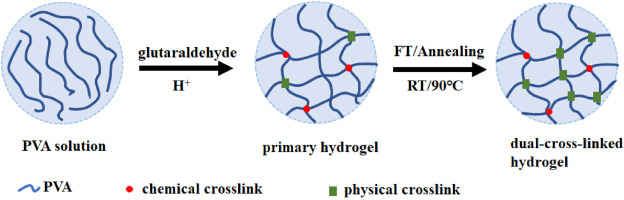
Fig.2 Schematic synthesis of PVA hydrogel with high strength and toughness. (Chen, et al., 2022)
Frequently Asked Questions
- What customizations are available for the hydrogel formulation?
Clients request modifications in terms of hydrogel strength, flexibility, degradation rates, and specific release profiles to suit particular application needs. -
What quality controls are in place for the production process?
We implement strict quality control measures to ensure the product standards of PVA hydrogel. Standardized tests are first used to ensure that materials meet predefined specifications. During the production process, reaction conditions are monitored and controlled in real time. Finally, the product is subjected to a series of tests to check its uniformity, stability, particle size distribution, and other relevant physical and chemical characteristics.
CD BioGlyco provides high-quality, professional PVA-based glycol nanohydrogel production services to meet a variety of scientific and commercial needs. Our services cover the entire process from custom formulation design to final product delivery, ensuring the excellent performance and reliability of the product. Welcome clients to feel free to contact us for more detailed service information.
References
- Chen, Y.; et al. Synthesis and properties of poly (vinyl alcohol) hydrogels with high strength and toughness. Polymer Testing. 2022, 108: 107516.
- Liang, X.; et al. Polyvinyl alcohol (PVA)-based hydrogels: Recent progress in fabrication, properties, and multifunctional applications. Polymers. 2024, 16(19): 2755.
Quick Links
Resources
- Glyco™ Synthesis Platform
- Custom Glycoprotein Synthesis
- Custom Glycoside Synthesis
- Custom Glycosyl Donor Synthesis
- Custom Thioglycoside Synthesis
- Custom Phosphatidylinositol Synthesis
- Custom Cyclodextrin Synthesis
- Custom Rhamnolipid Synthesis
- Custom Sphingolipid Synthesis
- Custom Building Block Synthesis
- Carbohydrate Manufacturing
- Synthesis Process Development and Optimization
- Custom Carbohydrate Synthesis
- Custom Glycolipid Synthesis
- Custom Glycopeptide Synthesis
- Custom Glycoconjugate Synthesis
- Custom Sugar-Nucleotide Synthesis
- Nucleoside & Nucleotide Synthesis Service
- Custom Oligonucleotide Synthesis Service
- Polynucleotide Synthesis Service
- Nucleoside & Nucleotide Modification Service
- Oligonucleotide Modification Service
- Nucleoside-based Production Service
- Nucleotide-based Production Service
- OPME-based NDP-sugar Synthesis Service
- OPME-based NMP-sugar Synthesis Service
- Glycomics Platform
- Glycoproteomics Platform
- N-Glycoproteomics of PDX Models
- Nanotechnologies for the Detection of Glycopeptides
- Glycoprotein Enrichment
- Glycoprotein Quantification
- Glyco-biomarker Detection Service
- Glyco-biomarker AFP Detection Service
- Glyco-biomarker CA19-9 Detection Service
- Glyco-biomarker CA125 Detection Service
- Glyco-biomarker CA15–3 Detection Service
- Glyco-biomarker CEA Detection Service
- Glyco-biomarker PSA Detection Service
- Glyco-biomarker Immunoglobulin G (IgG) Detection Service
- Glyco-biomarker Haptoglobin (Hp) Detection Service
- Glyco-biomarker α1-Antitrypsin (A1AT) Detection Service
- Glyco-biomarker α1-Acid Glycoprotein (AGP) Detection Service
- Glyco-biomarker Ceruloplasmin (CP) Detection Service
- Glyco-biomarker Fetuin A Detection Service
- Site Occupation
- Glycoprotein Structure Analysis
- Glycosylation Site-specific Antibody-Drug Conjugate (ADC) Development Platform
- Carbohydrate-based Glycomedicine Development Platform
- By Sources of Carbohydrate
- By Types of Carbohydrate
- Monosaccharides-based Glycomedicine Development
- Disaccharides-based Glycomedicine Development
- Trisaccharides-based Glycomedicine Development
- Oligosaccharides-based Glycomedicine Development
- Polysaccharides-based Glycomedicine Development
- Glycosides-based Glycomedicine Development
- Glycopeptide-based Glycomedicine Development
- Glycomimetic-based Glycomedicine Development
- By Applications of-based Glycomedicines
- Carbohydrate-based Anticoagulant Glycomedicine Development
- Carbohydrate-based Cardiovascular Glycomedicine Development
- Carbohydrate-based Antitumor Glycomedicine Development
- Carbohydrate-based Antidiabetic Glycomedicine Development
- Carbohydrate-based Antibacterial Glycomedicine Development
- Carbohydrate-based Antiviral Glycomedicines Development
- Carbohydrate-based Antiparasiti Glycomedicine Development
- By Discovery Strategies
- Glycoengineering-based Glycomedicine Development
- Production of Food Ingredients
- Multi-omics Platform for Cancer Glucose Metabolism (MOPCGM)
- Cancer Cell Glycolytic Analysis
- Cancer Cell TCA Cycle Analysis
- Cancer Cell PPP Analysis
- Gene-level Regulation Analysis of Cancer Glucose Metabolism
- Interplay Between Glucose Metabolism Reprogramming and Tumorigenesis & Progression
- Interplay Between Glucose Metabolism Reprogramming and Proliferative Signaling
- Interplay Between Glucose Metabolism Reprogramming and Growth Suppressor
- Interplay Between Glucose Metabolism Reprogramming and Cancer Cell Death
- Interplay Between Glucose Metabolism Reprogramming and Replicative Immortality
- Interplay Between Glucose Metabolism Reprogramming and Angiogenesis
- Interplay Between Glucose Metabolism Reprogramming and Invasion & Metastasis
- Interplay Between Glucose Metabolism Reprogramming and Immune Escape
- Interplay Between Glucose Metabolism Reprogramming and Genomic Instability
- Interplay Between Glucose Metabolism Reprogramming and Tumor-associated Inflammation
- Glucose Metabolism-Microenvironment Crosstalk Analysis in Cancer
- Cancer Glucose Metabolism In Vivo Analysis
- Applications of Studing Cancer Glucose Metabolism
- Discovery of Cancer Glucose Metabolism Small Molecule Inhibitor
- Discovery of Cancer Glucose Metabolism Therapeutic Monoclonal Antibodies
- Development of Gene Therapy Targeting Cancer Glucose Metabolism
- Discovery of Cancer Glucose Metabolism CAR-T Therapy Targeting
- Discovery of Cancer Glucose Metabolism Combination Therapy Strategy
- Discovery of Cancer Glucose Metabolism Precision Therapeutic Strategies
- Glycoengineering Platform
- Therapeutic Nucleic Acid Development Platform
- Therapeutic Oligonucleotide Synthesis Service
- siRNA Synthesis
- miRNA Synthesis
- ASO Synthesis
- Aptamer Synthesis
- PMO Synthesis
- sgRNA Synthesis
- Circular RNA Synthesis
- PNA Synthesis
- Lipid-based GalNac-RNA Delivery Service
- CpG Oligonucleotide Synthesis
- Click-based GalNac-RNA Delivery Service
- AntimiR Synthesis
- GalNAc-siRNA Delivery Service
- tRNA Synthesis
- GalNAc-ASO Delivery Service
- saRNA Synthesis
- Reporter Gene mRNA Synthesis
- Gene Editing mRNA Synthesis
- Gene Replacement mRNA Synthesis
- Cre Recombinase mRNA Synthesis
- hEPO mRNA Synthesis
- OVA mRNA Synthesis
- Therapeutic Oligonucleotide Modification Service
- Therapeutic Oligonucleotide Delivery Development Service
- Targeted Ligand and Linker Synthesis
- Monoantennary GalNac-RNA Delivery
- Biantennary GalNac-RNA Delivery
- Triantennary GalNac-RNA Delivery
- Tetra-antennary GalNac-RNA Delivery
- Solution Phase-based GalNac-RNA Delivery
- Solid Phase-based GalNac-RNA Delivery
- mRNA Poly(A) Tail Length Analysis
- GalNAc-siRNA Delivery
- GalNAc-ASO Delivery
- GalNAc-miRNA Delivery
- GalNAc-Aptamer Delivery
- GalNAc-AntimiR Delivery
- GalNAc-mRNA Delivery
- GalNAc-PNA Delivery
- Peptide-Therapeutic Oligonucleotide Delivery
- LNP-Therapeutic Oligonucleotide Delivery
- PEG-Therapeutic Oligonucleotide Delivery
- Biological Evaluation Service for Therapeutic Oligonucleotide
- mRNA-based Vaccine Development Service
- mRNA Sequence Design&Optimization Service
- mRNA Integrity Analysis ServicemRNA Integrity Analysis Service
- mRNA Biodistribution Analysis Service
- DNA Template Preparation Service
- mRNA Purity Analysis Service
- T Cell Cytokine Secretion Analysis Service
- mRNA Modification Service
- mRNA Length Analysis Service
- mRNA Purification Service
- Neutralizing Antibody Assay Service
- mRNA-LNP Formulation and Encapsulation Service
- mRNA Structural Characterization
- mRNA Structural Characterization Service
- mRNA Bioanalysis Service
- mRNA Residual DNA Template Analysis Service
- mRNA Residual Double-Stranded RNA (dsRNA) Analysis Service
- mRNA Size Analysis Service
- mRNA Polydispersity Analysis Service
- mRNA Zeta Potential Analysis Service
- mRNA Lipid Composition Analysis Service
- Oligonucleotide Drug Process and Formulation Development Service
- RNA Drug Process and Formulation Development
- Therapeutic Oligonucleotide Synthesis Service
- Glycobiology Microarray Platform
- Glyco™ Vaccine Development Platform
- Carbohydrate-based Vaccine Development
- Polysaccharide Vaccine Development
- Tumor-Associated Carbohydrate Vaccine Development
- Glycoconjugate Vaccine Development
- Natural Carbohydrate-based Vaccine Development
- Semi-synthetic Carbohydrate-based Vaccine Development
- Fully Synthetic Carbohydrate-based Vaccine Development
- Carbohydrate-based Antibacterial Vaccine Development
- Carbohydrate-based Antifungal Vaccine Development
- Carbohydrate-based Antiparasitic Vaccine Development
- Carbohydrate-based Antiviral Vaccine Development
- Carbohydrate-based Anticancer Vaccine Development
- Carbohydrate-based Antihelmintic Vaccine Development
- Monovalent Carbohydrate-based Vaccine Development
- Polyvalent Carbohydrate-based Vaccine Development
- Carrier Protein Design Service
- Carbohydrate Conjugation Service for Vaccine Development
- Carbohydrate-based Adjuvant Development
- Lipopolysaccharide-based Adjuvant Development
- Bacterial Outer Membrane Vesicles (OMVs)-based Adjuvant Development
- Trehalose Glycolipid-based Adjuvant Development
- Galactosylceramide-based Adjuvant Development
- Peptidoglycan-based Adjuvant Development
- Chitin/Chitosan-based Adjuvant Development
- Inulin-based Adjuvant Development
- Mannans-based Adjuvant Development
- Alginate-based Adjuvant Development
- Saponin-based Adjuvant Development
- α-Glucan-based Adjuvant Development
- Lentinan-based Adjuvant Development
- β-Glucans-based Adjuvant Development
- Deltin-based Adjuvant Development
- Muramyldipeptide-based Adjuvant Development
- Cord Factor-based Adjuvant Development
- Zwitterionic Polysaccharide-based Adjuvant Development
- Novel Plant Polysaccharides-based Adjuvant Development
- Glycoprotein-based Vaccine Development
- Glycopeptide-based Vaccine Development
- Carbohydrate-based Vaccine Development
- Glycogenomics Platform
- Glycogene Editing Service
- Glycogene Delivery Service
- Glycogene Expression Profiling
- Cancer Glycogene Discovery Service
- Glycogene Discovery Service in Cervical Cancer
- Glycogene Discovery Service in Leukemia
- Glycogene Discovery Service in Bladder Cancer
- Glycogene Discovery Service in Colorectal Adenocarcinoma
- Glycogene Discovery Service in Liver Cancer
- Glycogene Discovery Service in Lymphoma
- Glycogene Discovery Service in Breast Cancer
- Glycogene Discovery Service in Prostate Cancer
- Glycogene Discovery Service in Pancreatic Cancer
- Glycogene Discovery Service in Lung Cancer
- Glycogene Discovery Service in Thyroid Cancer
- Glycogene Discovery Service in Ovarian Cancer
- Glycan Display Platform
- Traditional Glycan Display Array
- Natural Oligosaccharide Library Construction Service
- Chemical Synthesis-based Oligosaccharide Library Construction Service
- Enzymatic Synthesis-based Oligosaccharide Library Construction Service
- Modular Synthesis-based Oligosaccharide Library Construction Service
- Oligosaccharide Library Immobilization Service
- Cell-based Glycan Display Array
- Neoglycolipid (NGL) Display Array
- Liquid Glycan Display Array (LiGA)
- Glycophage Display
- N-linked Glycoprotein-based Glycophage Display System Construction Service
- O-linked Glycoprotein-based Glycophage Display System Construction Service
- Glycophage Display-based Glycosylase Genetic Analysis Service
- Glycophag Display-based Glycoarray Service
- Glycophage Display-based Antibody Development Service
- Glycophage Display-based Epitope Mapping Service
- Glycophage Display-based Biomarker Development Service
- De Novo Glycan Display
- Cell-Surface Glycan Editing
- Examining the Effects of Altering Blood Group Antigens on Erythrocyte Cell Surfaces
- Preventing Cellular Rejection During Transplantation
- Modulating Chemical Composition and Physical Parameters of Glycocalyx
- Tailoring Cell Membranes with Biologically Active Glycans
- Targeting Glycosaminoglycan-mediated Growth Factor Signaling to Influence Stem Cell Specification
- Long-term De Novo Glycan Display for Directing Stem Cell Fate
- Traditional Glycan Display Array
- GlycoNano™ Platform
- Glyconanoparticle Development Service
- Techniques for Glyconanoparticle Development
- Carbohydrate-based Nanoparticle Production
- Gold Glyconanoparticle Production
- Silver Glyconanoparticle
- Magnetic Glyconanoparticle
- Quantum Dot (QD) Glyconanoparticle
- Glyconanoparticle Characterization
- PEG Glyconanoparticle
- Carbon-based Glyconanoparticle
- Fluorescent Glyconanoparticle
- Silica Glyconanoparticle
- Liposome Glyconanoparticle
- Glycol Nanohydrogel Development
- Glycol Nanorod
- Glycol Nanotube
- Glycol Nanocrystal/Nanosheet/Nanosphere/Nanofiber
- Glyconanoparticle Preclinical Study
- Glyconanoparticle Formulation
- Glyconanotechnology-based Biosensor Development
- GlycoNano™ Bioink Production for 3D Printing
- Glyconanoparticle Development Service
- Glyco™ Synthesis Platform


